Thursday, February 14, 2013

Newgrange...and leprechauns!


When you are living only an hour away from a Neolithic monument that is older than the pyramids and Stone Henge, it is certainly worthy of a visit - and so we headed off to Newgrange last Saturday. The monument is known as Brú Na Bóinne (the Boyne Palace) after the Boyne river which runs nearby. It was built in the new stone age period over 5000 years ago and it is amazing to see what people were able to build at that time.

Brú Na Bóinne is basically a burial site - but only for the most important of people of that time. It is a passage tomb so you enter through a small passage which you can see below. The outer walls are made of white stone (quartz) with small granite boulders and it is topped by a grassy dome. It is 80m in diameter and 13m high. Our guide explained to us that most of the stones used to build Newgrange are not local and would have had to be transported from up to 40km away  - some of the larger ones would have taken days to move into place. It is estimated that Newgrange took about 30 years to build, and given that the life expectancy of the people of that time was only about 30 years old, it would have taken generations to build it. 

Over time, the white stone walls collapsed and had to be rebuilt. Below is the entrance way to the tomb. The granite you can see below has been added in recent times (as have the wooden stairs!). When it was originally built the white stones would have reached right up to the large entrance stones at the opening of the tomb.
 

 The entrance stone above is very famous for its carvings - part of the Neolithic art tradition. This stone was believed to be a barrier between the living and the dead and people would have had to climb over it to enter into the tomb.Today we walked up the wooden stairs and then down to the entrance. Inside the tomb, the passage was is very small and narrow - they obviously were not large people at that time! The you come into the inner chamber which is where the bones and ashes of the dead (they were burnt beforehand) were places. The originally stones and carvings are still there, as it a lot of graffiti of names and dates carved into the stones from the 1800's and 1900's - when the monument was open to the public with little regulation.

What I found most fascinating is how the monument acted as a type of calender for that time. The tomb and the entrance passage are designed so that each year, only at the time of the winter solstice, the rising sun shines through the light box (which is that small little box you can see above the entrance way) and lights up the passage way and the main chamber for about 17 minutes. Our guide turned off all the lights when we were in the inside chamber and showed a recreation of what this would be like. You can enter a lottery to actually win tickets to be there for the real event in December. There are 6 days around December 21 when the sunlight will enter the chamber. We have put our names into the lottery, however last year 30,000 people entered and only 24 places are allocated each day - so I don't like our chances. It also depends on whether it's a sunny day!

There are many theories as to why the people of that time would have designed the tomb so that the sunlight would enter just on those few days of the year. I just think it is amazing that they would have been able to design and build such a huge structure, so long ago, and have it work so perfectly! Some people think that the sunlight was a way of re-energising the dead who were buried here - a way of looking after the spirits. It is also suggested that this acted as a type of calender for these people - a sign that the longest night was over and that it wouldn't be long before the spring arrived.

As you walk around the tomb, you can see smaller burial mounds (there is one in the photo below) and standing stones.


Below are some photos of the outside walls of the tomb as we walked all the way around it. You can see some more carvings on some of the outer stones.
 The girls thought this one looked a bit like an owl.


The  Brú Na Bóinne visitor's reconstructed elements of the daily life of the people who would have been alive at the time that Brú Na Bóinne was built. Their stone age period was the beginning of farming as a way of life (rather than just hunting) and their houses are believed to looked like the one above. 


On our way home we also stopped at the Battle of the Boyne Visitor Centre and battle site, which is where King William of III of Orange fought and won over King James II to gain control of Ireland and England.  This battle was fought on the field you see below and one of the reasons it is so important in Irish history is that it became a focal point for Protestants in Northern Ireland - as King William was a Protestant and King James was a Catholic. As James explains - this battle was like a Gallipoli for the Protestants (only they won) - it is the heart of their identity and civic nationalism (...you can tell these are James's words and not mine!!)


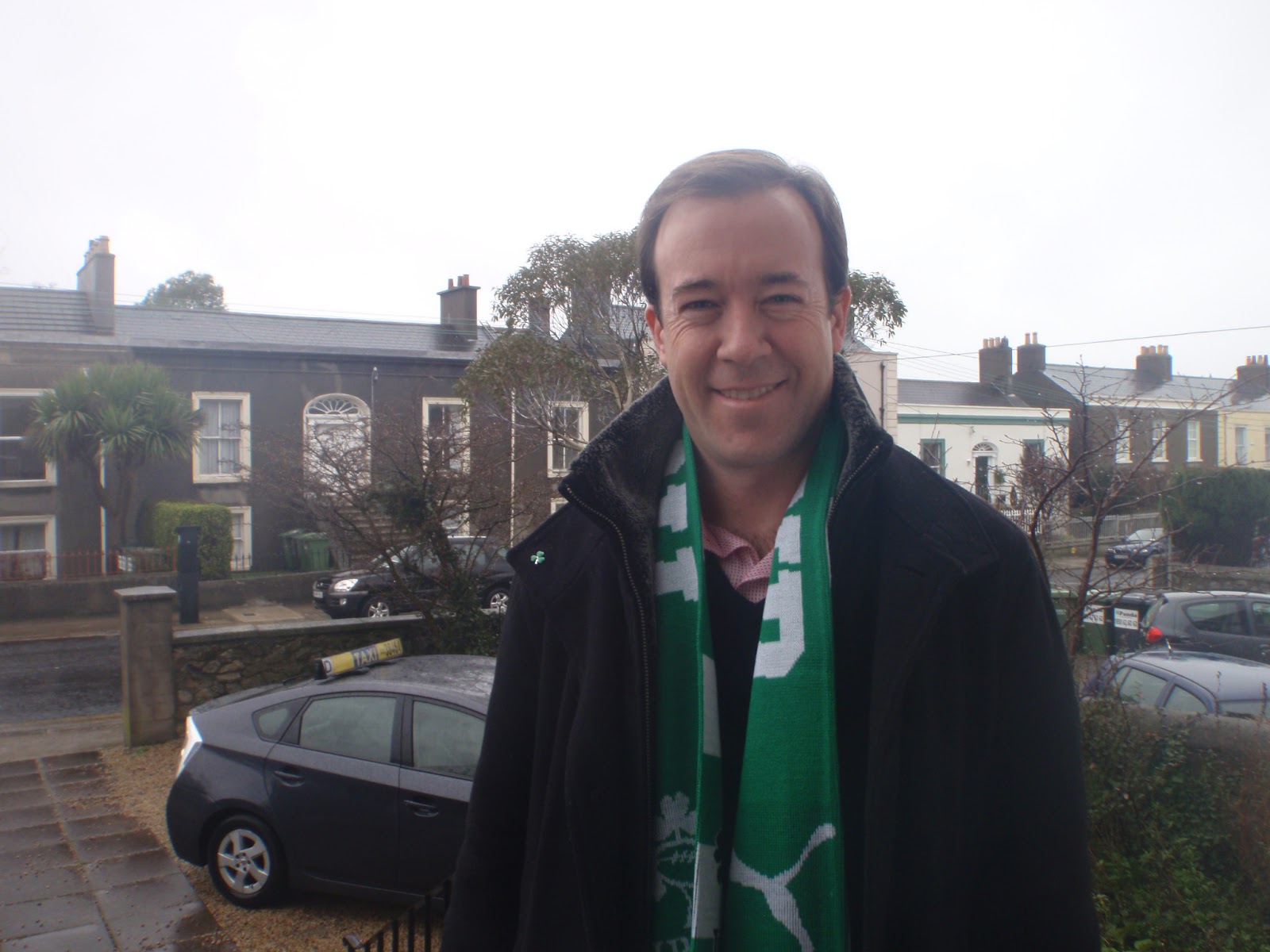
The next day, back in Dublin, James happily headed off to fulfill a life-long dream of attending a 6 Nations Rugby Match - Ireland vs England. Unfortunately, the outcome was not to his liking (nor to the rest of Ireland's) but he did enjoy the great atmosphere of Landsdowne Road!  (The highlight of my week was popping in as I was passing by Trinity College to see the Book of Kells - there was hardly anyone there and I got to take my time looking at the beautifully illustrated pages - but more on the Book of Kells in another post.)
 
Today the girls' and I made the most of their mini Half-Term Break and visited the National Leprechaun museum where we were told many stories about leprechauns, faeries and banshees! We also got to pretend that we were leprechauns by sitting on oversize chairs......
 finding a pot of gold.................

and making a wish in a wishing well.

 There were other ways to pretend to be leprechauns as well...as you can see below!


 Pia and Ella finished off the tour by drawing their own leprechaun pictures which were then proudly hung in the Leprechaun Gallery at the museum!


Tomorrow we are also making the most of the Half-Term break to do a short trip away to Kilkenny so I will report back to you about that trip in my next post.

Tuesday, February 5, 2013

Glendalough - celebrating Ella's birthday


As many of you would know, last Thursday was Ella's birthday. She had originally thought it would be nice to stay in a castle for her birthday but it soon became apparent that we were not going to get that organised (we'll try and do that later on in this trip)! However, after looking through our trusty Lonely Planet, we soon spotted something that looked just as interesting. It looked just like Rapunzel's Tower which was very pleasing to Ella, of course! So we decided to extend Ella's birthday celebrations into the weekend with our first trip into the Irish countryside. We headed about an hour's drive south of Dublin to Glendalough, where there are the ruins of an ancient monastic settlement. Glendalough is in County Wicklow and is the site where an Irish monk, Kevin, (now Saint Kevin) arrived in AD 498  looking for a peaceful place where he could set up camp, relax, meditate and be one with nature! After having visited, we all agreed that Glendalough was a beautiful choice, although he must have been freezing in winter! Apparently, Kevin slept on stones, wearing only animal skins, and for the next seven years he lived as a hermit, becoming friends with the birds and animals. Eventually his lifestyle attracted others and he was joined by other monks and by the 9th century, his settlement in Glendalough had grown very large and thousands of students came to study and live there. What is left today are the ruins that have survived all this time, despite the monastery having been raided several times by those Vikings who we were reading all about last week in Dublinia! The monastery was also attacked by the English in the 14th century and the settlement finally died there in the 17th century.

It was amazing to walk around the ruins of this settlement and to see the gravestones amongst the ruins, some of which were so old that they were sunken into the ground and unable to be read, others looked quite modern and dated from the 21st century. Below, Pia and Ella stand at the main gateway to the settlement - the place where the monks would enter and leave the real world behind them!


This small church has been given the nickname of St Kevin's Kitchen as it has a round tower sticking out of the roof, which looks like a chimney . I liked the small stone cross at the top of the roof, which you can see below.

Glendalough is most famous for its main Round Tower (the one we called Rapunzel's Tower!) and it stands at 33m high. Ella spent the next few hours searching for tresses of golden hair falling from the highest windows! However, the real purpose of this tower was a bell tower, calling the monks to prayer. The roof was replaced in 1876 after a lightning strike but the rest of the tower is exactly as it was built one thousand years ago. You can see the doorway in the photo below. It is actually 3 metres off ground level. It was thought it was built like this as a defensive measure so that the monks could climb in with a ladder and then pull the ladder inside to protect themselves from attackers.
The remains of the church above are that of the Cathedral of Saints Peter and Paul. This was the largest of the churches and you can see the remains of the supports that would once have held a wooden roof. I loved its big empty windows.

Glendalough is also known for its beautiful walks and as we rejoined one of the walking paths we came across this set of stones, which is known as the Deer Stone. Legend has it that Kevin was so in-tune with animals that once, when he needed milk to feed a baby, he was able to milk a doe on this spot! Unfortunately, there were no deers to be seen on the day we visited (and no squirrels either!)


Glendalough's name actually means 'Valley of the Two Lakes' and on our walk we passed the Lower Lake before arriving at the Upper Lake. This was our first glimpse of the scenery that Ireland is so famous for, and we were lucky to have such a beautiful sunny day (although still very cold!). The ring of stones below is called a caher. It is of unknown date and I'm not sure what it's purpose was. There are a few stone crosses nearby which were apparently used as markers for pilgrims. Below are some more photos of us all by the Upper Lake.


Around the lake is another church, Reefert Church, which dates from 1100. It has seven princes from the powerful O'Toole family who once ruled this area, buried in it......
 

and it also has some pretty amazing moss-covered stone walls.

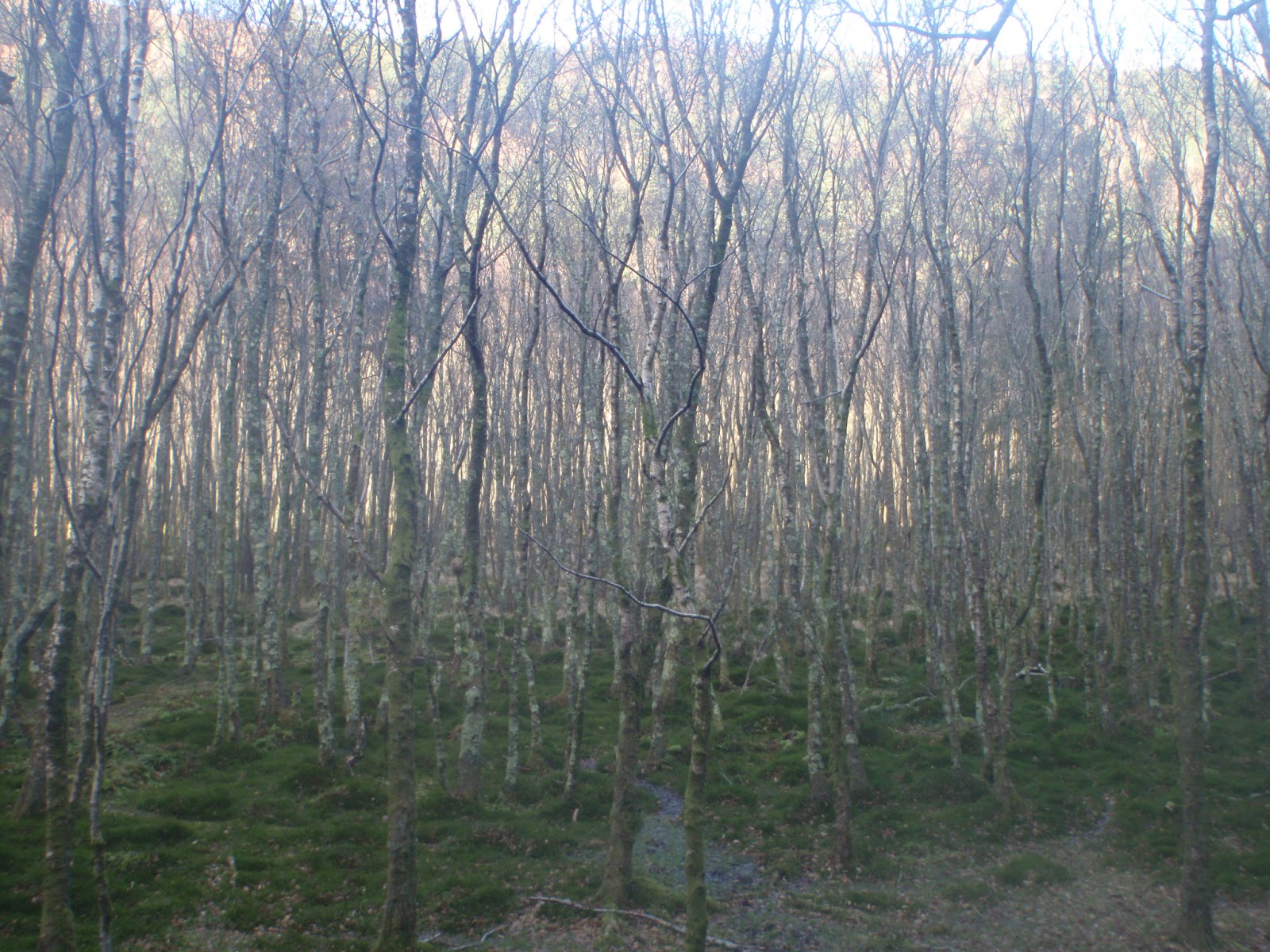
On our walk around the monastery site and the lakes, we were able to see such a variety of scenery - some man-made such as these crosses, as well as beautiful trees (and beautiful tree roots!) as well as small little waterfalls and the larger Poulanass waterfall.


On our walk back to the hotel we were treated to another few beautiful glimpses of the monastic ruins and 'Rapunzel's Tower'!

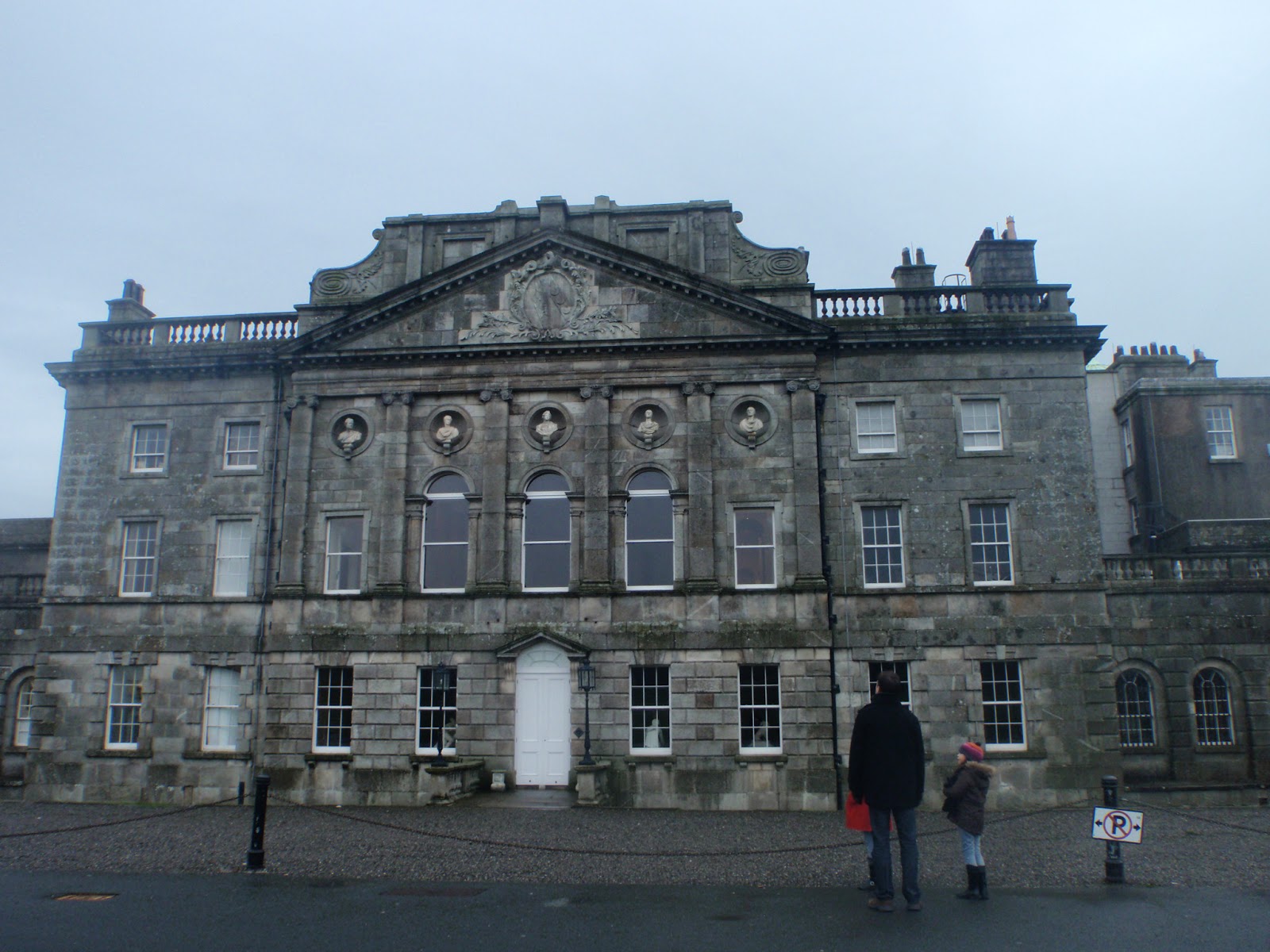
The next day, we stopped at the Powerscourt Estate, just outside the little village of Enniskerry. This estate was originally a castle built by LePoer (which is where the name Power comes from) around 1300, and then, as it changed hands over the years it was transformed into a Palladian-style mansion in the 18th century. Much of the inside was destroyed by fire in 1974 but some of the rooms have been restored. As we were not so lucky with the weather this day - it was freezing (again!) and raining - we decided to leave our visit of the beautiful gardens here for a nicer day (Powerscourt is only about 1/2 hour away from Dublin). We did, however, go inside the house and see the restored ballroom and looked at the gardens from the warmth of inside.


Inside Powerscourt, there is also the Museum of Childhood, which houses a very impressive 24-room doll's house, complete with miniature vintage furniture and even tiny little books and newspapers which could be read (if they weren't behind glass!) Ella loved the playroom at the end in which she did an excellent job of being shopkeeper and organising her store!

I'll finish off with a few photos from Ella's 7th birthday celebrations in Dublin! Going into the city on the DART, a birthday drink at Les Bruxelles, dinner at Ella's choice of restaurant (Carluccio's), followed by birthday cake at home.